Chikwangue (Congolese Steamed Cassava Loaves)
In short: Fermented cassava dough wrapped in leaves and boiled into dense, slightly sour loaves, the Congolese staple eaten with leafy stews and grilled fish. It takes about 2 h 30 min in total and makes 8 servings.
- Prep
- 1 h 15 min
- Cook
- 1 h 15 min
- Resting
- 72 h
- Total
- 2 h 30 min
- Servings
- 8
- Difficulty
- Challenging
- Calories
- 275 kcal
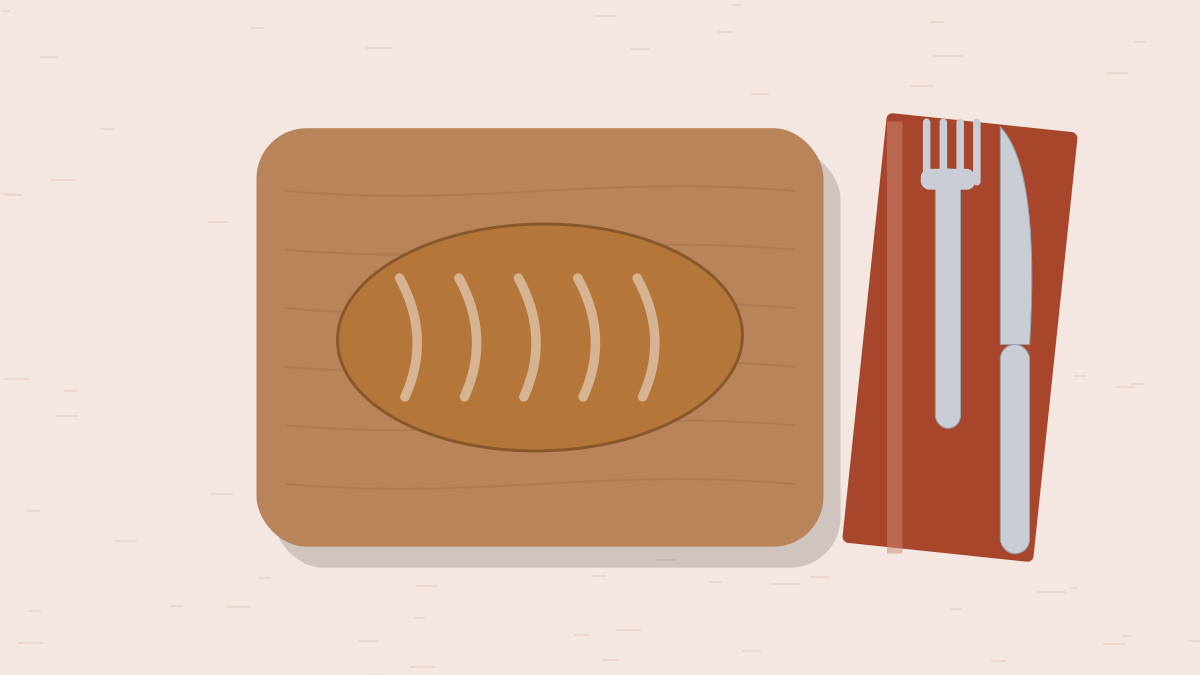
Chikwangue, also called kwanga, is the cassava loaf that sits next to almost every Congolese meal. Peeled cassava roots are soaked for several days until they ferment and soften, then pressed, kneaded into a smooth dough, wrapped in leaves and boiled for an hour or more. The result is dense, mildly sour and a little chewy, and it works well for scooping up sauces. This home version uses supermarket cassava and takes three days, mostly waiting.
Instructions
- Peel the cassava and cut each root in half lengthwise. Cut out the woody core, then cut the flesh into pieces about 6 cm (2 1/2 in) long.
- Put the pieces in a large pot or bowl and cover with cold water by 5 cm (2 in). Cover loosely and leave at room temperature for 3 days (2 days in a hot kitchen), changing the water every day, until the pieces are soft enough to crush between your fingers and smell pleasantly sour.
- Drain and rinse the cassava. Process it in batches in a food processor with a splash of water until it forms a coarse, damp pulp.
- Tip the pulp into a clean cloth, twist the ends and squeeze out as much liquid as you can. Press it under a heavy weight for 30 minutes.
- Knead the pressed pulp on a clean surface for 5 to 8 minutes, until it becomes a smooth, sticky, elastic dough. Divide it into 4 portions and shape each into a log about 18 cm (7 in) long.
- Soften the banana leaves over a flame or in hot water. Wrap each log tightly, fold in the ends and tie with kitchen string. Without banana leaves, wrap in parchment and then foil.
- Lower the parcels into a large pot of boiling water, cover and boil for 60 to 75 minutes, turning once and topping up the water as needed, until the loaves feel firm and the dough is dense and translucent.
- Cool for 15 minutes in the wrapping, then unwrap and slice. Serve with saka-saka, grilled fish or any stew.
Tips
- Use fresh sweet cassava, sold as yuca in supermarkets, and remove every bit of the woody core. Keep the pieces fully under water while soaking. Discard the batch if you see mold or smell something rotten rather than sour.
- Never eat cassava raw or undercooked. Boiling the loaves for the full time makes them safe. Chikwangue keeps for 5 days in the fridge, and slices can be reheated by steaming or pan-frying.
Questions and answers
What does chikwangue taste like?
It is mildly sour and slightly sweet, with a dense, chewy texture. On its own it is plain, which is why it is always eaten with a sauce.
Why does cassava need to be soaked?
Soaking ferments the roots, which softens them, removes natural compounds that are harmful when cassava is raw, and gives chikwangue its mild sourness.
Can I make chikwangue with cassava flour?
A dough of cassava flour and boiling water makes a similar stiff, stretchy staple, but it lacks the fermented flavor and texture of true chikwangue.
How long does it take to make Chikwangue (Congolese Steamed Cassava Loaves)?
About 2 h 30 min in total: 1 h 15 min of preparation and 1 h 15 min of cooking.
How many calories are in Chikwangue (Congolese Steamed Cassava Loaves)?
About 275 kcal per serving, with 2 g of protein, 63 g of carbohydrates and 1 g of fat. These values are estimates.
Nutrition per serving
| Calories | 275 kcal |
|---|---|
| Protein | 2 g |
| Carbohydrates | 63 g |
| Fat | 1 g |
| Fiber | 3 g |
| Sugar | 2 g |
| Sodium | 10 mg |
Estimated values, calculated from the ingredients.